De røde heste
Distribution

Johannes Meyer
Købmand Hans Offor

Poul Reichhardt
Ole Anders Offor - Hans søn
Pia Ahnfelt-Rønne
Sara Offor - Hans datter
Peter Malberg
Mikkel Pind
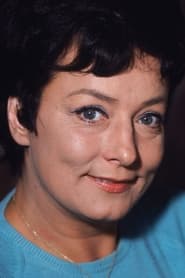
Lily Broberg
Henriette

Ejner Federspiel
Anders Munk - proprietær på Enekær

Tove Maës
Bente Marie Munk - Munks datter
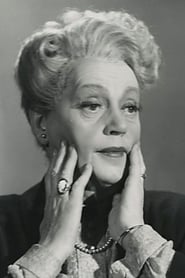
Maria Garland
Konstance Munk, Bentes faster

Else Jarlbak
Zita - Munks anden hustru
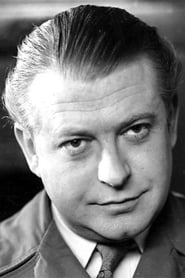
Jørn Jeppesen
Jørgen Senille - træner
Mette Bjerre
Dorthe - Jørgens kone
Ib Conradi
Peter - Jørgens søn
Films recommandés
 ⭐ 6.3
⭐ 6.3The Crumbs
The tween, Mads, finds it hard to fit in. Having feelings for a girl in class and a clumsy farther who is a teacher at his school doesn't help. By an unforeseen chance of events, Mads becomes somewhat of a hero, but will he win the girl?
 ⭐ 6.7
⭐ 6.71
Early morning silence is broken by screeching tires as a helicopter bears down on a speeding vehicle. Taking a quick corner, the team tumbles out into the woods as their car pulls away. Now they must make their way through the thick of nature and thick gunfire to accomplish their mission. Not a single word of dialogue is spoken throughout the entire film. Instead, the music, sounds, images and deeply truthful acting turn a simple plot into an intense experience. Passion and intrigue keep building to the very end.
 ⭐ 7.5
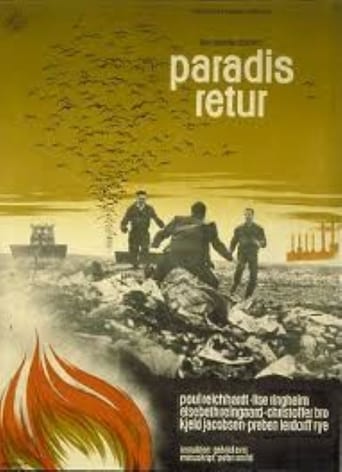
⭐ 7.5Paradise and Back
Tonnemann lives in one of the wooden sheds at the far end of Islands Brygge, close to Copenhagen's landfill site. But in 1928, he wants to leave this environment behind – to go where the air is fresh and life may offer both security and meaning. He is already on his way with his packed suitcase to sign on to a long-distance boat when a lovely girl gets in his way with her little red sports car.
 ⭐ 7.2
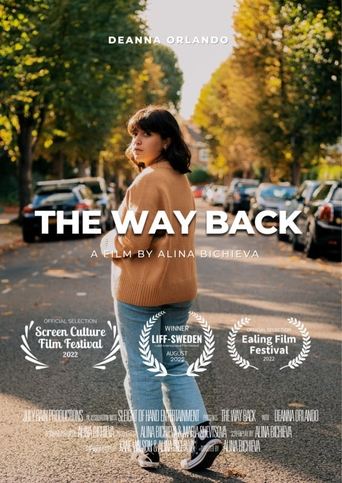
⭐ 7.2The Way Back
Ember is a 21-year-old photography student, stubborn, confident and independent. Her biggest dream has always been to move out of her hometown - she hated it for as long as she could remember and never felt comfortable there. But as Ember fulfils her dream and moves away to a different city, she keeps coming back to the memories of her past life and introspecting her connection with her hometown.
 ⭐ 6.0
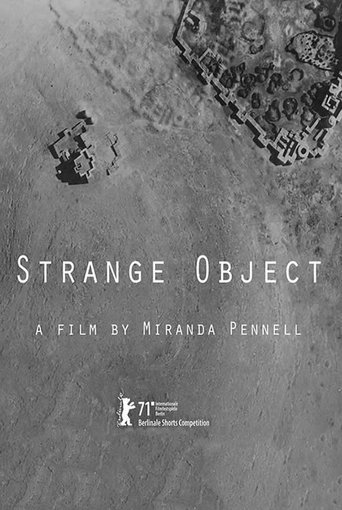
⭐ 6.0Strange Object
An archival investigation into the imperial image-making of the RAF ‘Z Unit’, which determined the destruction of human, animal and cultural life across Somaliland, as well as Africa and Asia.
 ⭐ 7.3
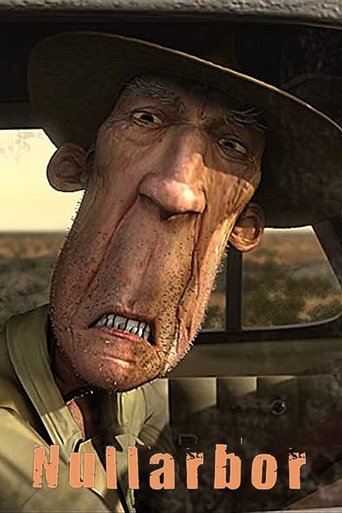
⭐ 7.3Nullarbor
An animated road-movie set across the vast and barren landscape of Australia's Nullarbor Plain.
 ⭐ 6.8
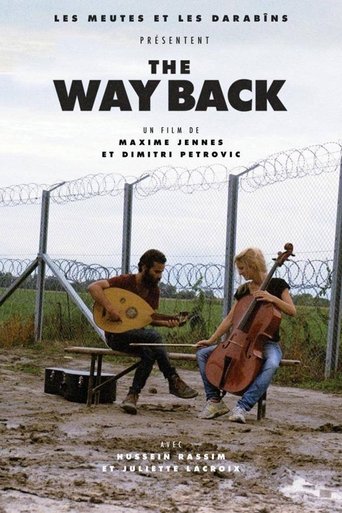
⭐ 6.8The Way Back
Hüseyin Al Baldawi arrives in Brussels in August 2015. He has traveled thousands of kilometers until he got there from Iraq. A year after his arrival, he receives his residence permit and decides to go to Greece. This journey from Brussels to Athens involves the viewers on the difficulties faced by Hüseyin and thousands of other immigrants. While the story of Hüseyin is taking shape through the countries he travels, the forgotten people he meets and the selfish society of Europe give us many messages, as well.
 ⭐ 7.4
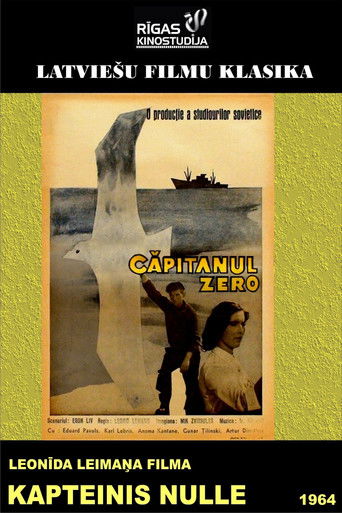
⭐ 7.4Captain Nulle
Valdis Nulle is a young and ambitious captain of fishing ship 'Dzintars'. He has his views on fishing methods but the sea makes its own rules. Kolkhoz authorities are forced to include dubious characters in his crew, for example, former captain Bauze and silent alcoholic Juhans. The young captain lacks experience in working with so many fishermen on board. Unexpectedly, pretty engineer Sabīne is ordered to test a new construction fishing net on Nulle's ship and 'production conflict' between her and the captain arises...
Film
"This piece, with the generic title Film, is a series of short videos built around one protocol: a snippet of news from a newspaper of the day, is rolled up and then placed on a black-inked surface. On making contact with the liquid, the roll opens and of Its own accord frees itself of the gesture that fashioned it. As it comes alive in this way, the sliver of paper reveals Its hitherto unexposed content; this unpredictable kinematics is evidence of the constant impermanence of news. As well as exploring a certain archaeology of cinema, the mechanism references the passage of time: the ink, whether it is poured or printed, is the ink of ongoing human history." –Ismaïl Bahri
 ⭐ 6.8
⭐ 6.8Film
Before the three feature films, Mario Schifano directs the camera towards the people around him to create real film diaries. His friends, his time partner and the artists he frequented are portrayed in their everyday life or object of the mechanical gaze of the camera, a filter through which to look at the outside world.