Spazio 5 - Il settimanale del TG5 - Un anno di sport
Distribution

Marco Santin

Giorgio Gherarducci

Carlo Taranto

Teo Teocoli
Films recommandés
Mai dire 94 - Un anno di sport
This was a special episode of the Italia 1 Studio Aperto broadcast, commented by Gialappa's band and conducted by Felice Caccamo (the character played by Teo Teocoli in Mai dire gol) and Epifanio (the character played by Antonio Albanese in Mai dire gol) in which commented on the sporting events of 1994.
 ⭐ 7.4
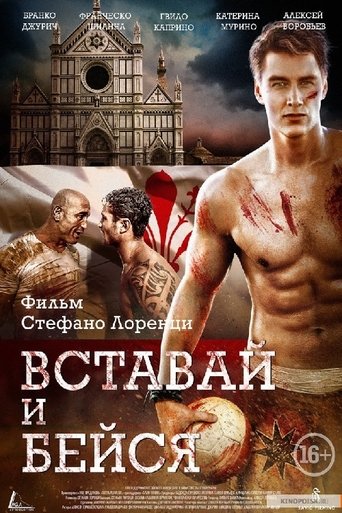
⭐ 7.4Florence Fight Club
Intertwined stories from the gladiator/athletes participating to the Calcio Storico Fiorentino yearly championship.
 ⭐ 6.0
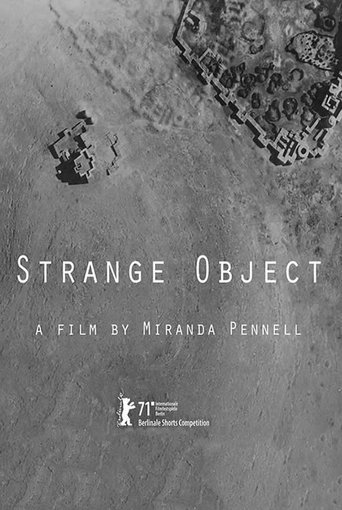
⭐ 6.0Strange Object
An archival investigation into the imperial image-making of the RAF ‘Z Unit’, which determined the destruction of human, animal and cultural life across Somaliland, as well as Africa and Asia.
 ⭐ 7.3
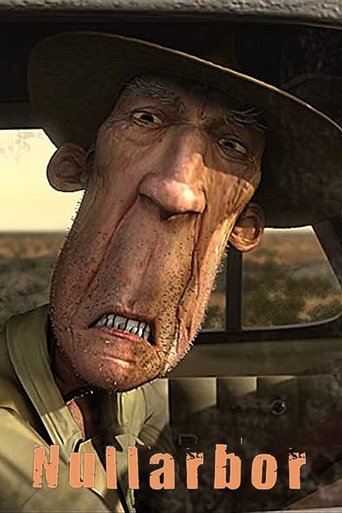
⭐ 7.3Nullarbor
An animated road-movie set across the vast and barren landscape of Australia's Nullarbor Plain.
NULL
A hitman is tasked to take out ex-mobsters when he suddenly hears a voice that questions his morality.
 ⭐ 8.1
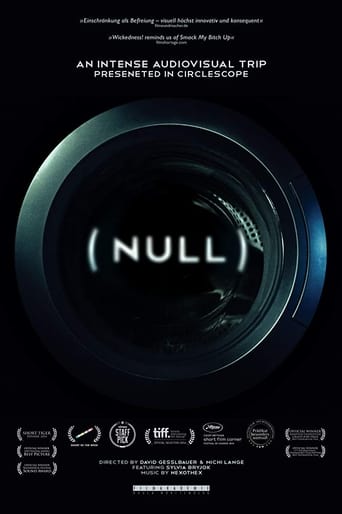
⭐ 8.1(NULL)
An unknown girl breaks out of her daily grind by undergoing an intense audio-visual trip.
 ⭐ 7.4
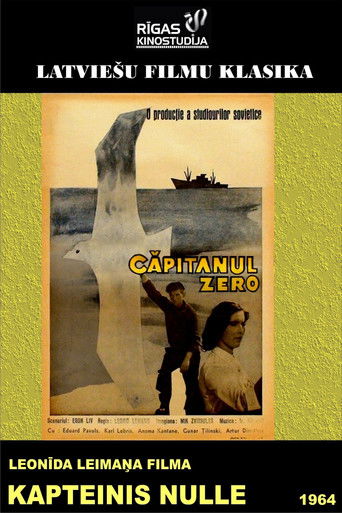
⭐ 7.4Captain Nulle
Valdis Nulle is a young and ambitious captain of fishing ship 'Dzintars'. He has his views on fishing methods but the sea makes its own rules. Kolkhoz authorities are forced to include dubious characters in his crew, for example, former captain Bauze and silent alcoholic Juhans. The young captain lacks experience in working with so many fishermen on board. Unexpectedly, pretty engineer Sabīne is ordered to test a new construction fishing net on Nulle's ship and 'production conflict' between her and the captain arises...
 ⭐ 5.0
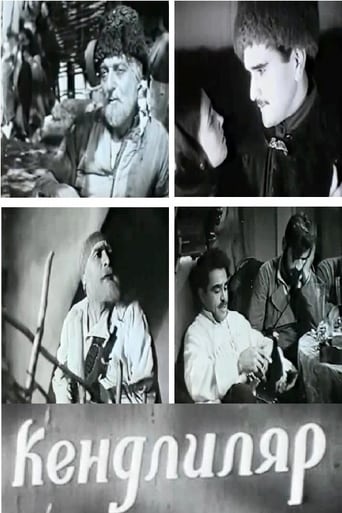
⭐ 5.0The Peasants
A historical revolutionary film depicting the struggle of peasants and the Baku proletariat against landowners and Musavatists in 1919.
Film
"This piece, with the generic title Film, is a series of short videos built around one protocol: a snippet of news from a newspaper of the day, is rolled up and then placed on a black-inked surface. On making contact with the liquid, the roll opens and of Its own accord frees itself of the gesture that fashioned it. As it comes alive in this way, the sliver of paper reveals Its hitherto unexposed content; this unpredictable kinematics is evidence of the constant impermanence of news. As well as exploring a certain archaeology of cinema, the mechanism references the passage of time: the ink, whether it is poured or printed, is the ink of ongoing human history." –Ismaïl Bahri